

It is 3pm. You have had your coffee, you slept a reasonable number of hours, and yet here you are, staring at your screen and wondering where your energy went. Sound familiar?
Here is something we wish more people knew: that afternoon slump usually is not a caffeine problem. It is a cellular one. Your body has a built-in energy production system that runs around the clock, and when it is well supported, you feel it. Steady energy, clearer thinking, easier workouts. When it is running low on resources, you feel that too.
The good news? You have more influence over this system than you might think. Let us introduce you to your mitochondria.
What Your Mitochondria Actually Do
Mitochondria are tiny structures inside nearly every cell in your body. Think of them as your cells’ power plants. Their job is to take the food you eat and the oxygen you breathe and convert them into a form of energy your body can actually use, a molecule called ATP.
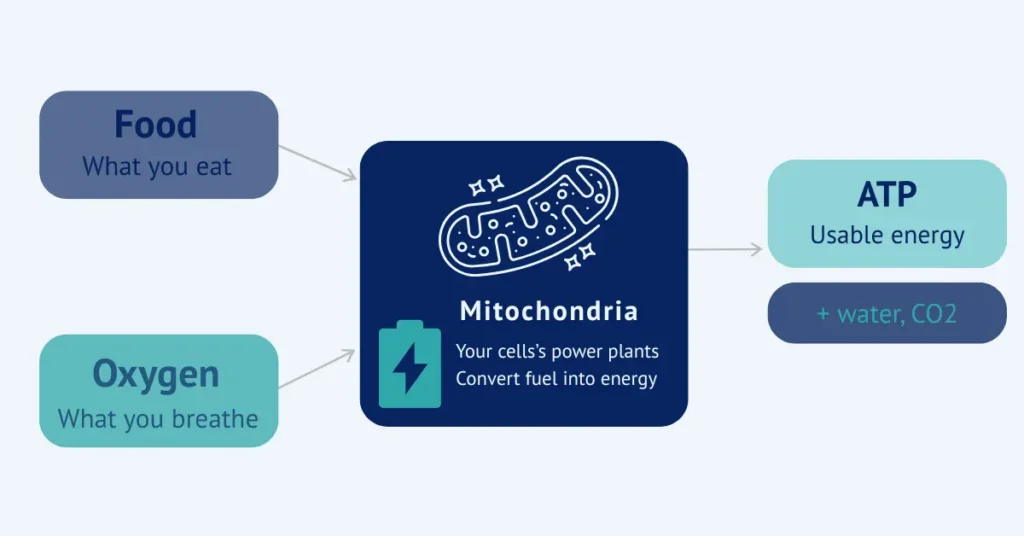
Every heartbeat, every step, every thought requires ATP. Your muscles, brain, and heart are especially packed with mitochondria because they demand so much energy. A single heart cell can contain thousands of them.
So when we talk about mitochondrial health, we are really talking about how efficiently your body produces energy at the most fundamental level. This is why supporting your mitochondria can influence how you feel all day long, not just during a workout.
Why Energy Dips Happen
Mitochondria are hard workers, but they are also sensitive to how we live. A few common factors can slow down energy production:
- Age. Mitochondrial efficiency naturally declines over time, which is one reason energy can feel different in your 40s, 50s, and beyond. The encouraging part is that lifestyle choices can meaningfully influence this process.
- Chronic stress. When your body is stuck in fight-or-flight mode, resources get diverted away from efficient, long-term energy production.
- Poor sleep. Sleep is when much of your cellular repair and maintenance happens. Skimp on it, and your mitochondria do not get their scheduled tune-up.
- Blood sugar swings. Big spikes and crashes force your cells to work with an unpredictable fuel supply, which is a lot like trying to run a power plant on an unreliable fuel delivery schedule.
- Nutrient gaps. Energy production requires specific raw materials, including B vitamins, magnesium, and CoQ10. Without enough of them, the whole assembly line slows down.
If several of these sound like your life right now, please do not read this as a list of failures. Think of low energy as a signal, your body’s way of telling you it needs more support. And support is very doable.
How to Support Your Mitochondria Every Day
You do not need a complicated protocol to care for your cellular energy. Consistent, simple habits are what mitochondria respond to best.
Eat the rainbow (and enough protein). Colorful fruits and vegetables deliver antioxidants that protect mitochondria from everyday wear and tear. Pair them with quality protein and healthy fats like olive oil, nuts, and fatty fish, which provide the building blocks your cells need to repair and rebuild.
Move your body, even gently. Here is one of our favorite facts in all of wellness: exercise actually signals your body to build new mitochondria. You do not need intense training to get this benefit. A brisk daily walk, a bike ride, or a yoga session all count. Strength training adds an extra boost by building muscle, which is dense with mitochondria.
Protect your sleep. Overnight is when your body clears out damaged cellular components and repairs the rest. Aim for a consistent bedtime and a wind-down routine. If sleep has been a struggle lately, we wrote a post on building better sleep naturally, and it pairs perfectly with everything here.
Stay hydrated. Every step of energy production happens in a water-based environment. Even mild dehydration can leave you feeling foggy and fatigued. Keep water within reach all day, and add electrolytes when you are sweating through these warm Maine summer days.
Mind the key nutrients. A few nutrients play starring roles in energy production. CoQ10 sits directly inside the mitochondrial assembly line. Magnesium is required for ATP to actually function. B vitamins help convert food into usable fuel. A well-rounded diet is the foundation, and targeted supplementation can help fill genuine gaps. If you are curious whether these make sense for you, stop by the pharmacy and ask. This is exactly the kind of question we love.
Supplementation
CoQ10. This helps your cells turn food into energy, right where the energy is made. It also helps protect your cells from damage. Your body makes its own CoQ10, but you make less of it as you get older. Some medicines, like statins that lower cholesterol, can lower it too.
Acetyl-L-carnitine. This helps move fat into your cells so your body can burn it for energy. Think of it like carrying wood to a fire. It also reaches the brain, so people use it for focus and clear thinking, not just energy.
R-lipoic acid. This one does two jobs at once. It helps your cells make energy, and it helps protect them from damage. It also helps vitamins C and E keep doing their work.
Thiamine (vitamin B1). This vitamin helps your body turn the food you eat into energy. When you are low on it, you can feel tired.
Phosphatidylserine. This is a building block for your cells. It is best known for helping with memory and focus. It may also help your body handle stress, which is good, because stress is hard on your cells.
These are not right for everyone, and taking more is not better. The best choice depends on your body, your lab results, and any medicines you take. We love helping with this. Stop by the pharmacy or book a Discovery Call, and we can figure out what is right for you.
When to Go Deeper
Sometimes fatigue has straightforward causes, and simple changes make a real difference. Other times, low energy is a sign that something deeper deserves attention, like thyroid function, nutrient status, blood sugar regulation, or hormone balance.
If you have been doing the right things and still feel like you are running on empty, that is worth exploring, not pushing through. Our Wellness Pharmacist takes a personalized look at how you are fueling your body, and a free Discovery Call is an easy, no-pressure way to talk through what you are experiencing and whether working together makes sense. https://www.coastalpharmacyandwellness.com/wellness-services/wellness-programs
Your energy is not a fixed trait. It is something your body creates, billions of times per second, and it responds to how you care for it. Your mitochondria are already working hard for you. A little support goes a long way.