

Why Rest Is One of the Most Powerful Tools for Healing
Why Sleep Matters
Sleep is not just passive rest; it is an active and essential process. Every night, your body repairs tissues, balances hormones, strengthens immunity, consolidates memories, and clears toxins from the brain while you sleep. We’ll outline how sleep affects your health.
Neuroscientists call sleep “when the brain takes out the trash.” During deep sleep, the brain’s glymphatic system, which clears waste, becomes active. Cerebrospinal fluid moves between brain cells and flushes out metabolic byproducts from the day, including beta-amyloid, a protein linked to Alzheimer’s disease. If you regularly sleep poorly, these waste products can build up in brain tissue and raise your long-term neurological risk.1
Sleep quality and consistency are just as important as the length of your sleep. Eight hours of restless sleep is not as restorative as eight hours of deep, uninterrupted rest. Irregular sleep hours can also disrupt your body’s internal rhythms. To get restorative sleep, you need both enough time and a regular schedule.
The Biology of Sleep
To understand how sleep affects your health, it helps to know how your body regulates it. Two connected systems control when you sleep and how well you rest.
1. The Circadian Rhythm
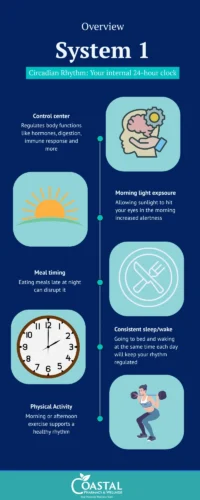
Your circadian rhythm is your body’s 24-hour internal clock. It controls sleep, wakefulness, hormones, digestion, temperature, immunity, and more. Light has the biggest impact on this clock. Morning light lowers melatonin and helps you feel alert, while darkness tells your brain to get ready for sleep.2
Beyond light, several other factors influence circadian rhythm:
- Meal timing: Eating late at night can shift your body clock to a later schedule.
- Physical activity, especially in the morning or afternoon, helps maintain your body’s rhythm.
- Consistent sleep and wake times are perhaps the most effective way to keep your internal clock on track.
When your circadian rhythm is disrupted by factors such as shift work, traveling across time zones, irregular schedules, or exposure to too much artificial light at night, it can affect your mood, metabolism, immunity, and heart health.
2. Sleep Pressure
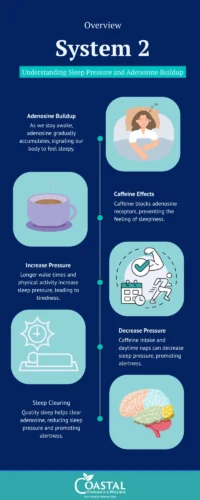
Sleep pressure, also called homeostatic sleep drive, is the second system. Throughout the day, adenosine, a byproduct of brain activity, builds up.3 The longer you are awake, the more adenosine collects, making you feel sleepier.
Several factors influence how quickly sleep pressure builds or dissipates:
- More physical activity and longer periods awake raise adenosine levels, which strengthen sleep pressure.
- Daytime naps temporarily reduce it, which is why a long nap too close to bedtime can make it harder to fall asleep at night.
- Caffeine blocks adenosine receptors but does not eliminate sleep pressure. When the caffeine wears off, the built-up adenosine causes an energy crash.4
While you sleep, adenosine is cleared from your brain. This leaves you feeling refreshed and relieves sleep pressure.
What Sleep Affects
Sleep affects almost every system in your body. Here is a closer look at how sleep shapes your health in important areas.
Hormone Balance
Sleep is closely connected to your endocrine system, which is your body’s network of hormone-producing glands. Growth hormone, which repairs tissues, maintains muscle, and supports fat metabolism, is released mostly during deep sleep.5 Cortisol, your main stress hormone, follows a daily pattern: it is low at night and peaks in the early morning to help you wake up. Poor sleep disrupts this rhythm, keeping cortisol high at night when it should be low. Over time, high cortisol is linked to anxiety, weight gain, blood sugar problems, and weaker immunity. Sleep also regulates leptin and ghrelin, the hormones that control hunger and fullness. This helps explain why people who do not sleep enough often eat more and crave high-calorie foods.
Energy & Metabolism
Your body’s ability to process and use energy depends a lot on sleep. During sleep, insulin sensitivity improves, and your body manages glucose more efficiently. Even one night of poor sleep can lower insulin sensitivity, which means your cells respond less to insulin and your blood sugar rises more than usual after eating. Over time, this increases the risk of type 2 diabetes and metabolic syndrome. Sleep also affects how well your mitochondria, the parts of your cells that produce energy, work. This is why people who sleep poorly often feel tired no matter how much coffee they drink.
Brain Function & Memory
Cognitive performance is one of the first things to suffer when you do not get enough sleep. Attention, reaction time, decision-making, and creative problem-solving all get worse after just one or two nights of poor rest. But sleep’s role in the brain goes beyond just staying alert. During sleep, especially during REM (Rapid Eye Movement) sleep, the brain processes and stores the day’s experiences, moving information from short-term to long-term memory.6 This is why students who sleep well after studying remember more than those who stay up all night. Sleep is also important for emotional health. REM sleep helps the brain process emotions, making them feel less intense over time. On the other hand, chronic sleep loss is linked to more emotional ups and downs, trouble managing mood, and a higher risk of anxiety and depression.
Immune Health
Sleep and immunity are closely linked. While you sleep, your body makes more cytokines, which are proteins that help coordinate immune responses, as well as T-cells and natural killer cells that fight off germs. People who regularly get less than seven hours of sleep per night are more likely to catch a cold when exposed to a virus. Sleep also helps vaccines work better. Studies show that people who sleep well after vaccination develop a stronger antibody response than those who do not.7
Inflammation
Poor sleep strongly increases systemic inflammation. When you do not get enough sleep, levels of inflammatory markers such as C-reactive protein (CRP, a protein made by the liver in response to inflammation) and interleukin-6 (IL-6, a molecule involved in immune response and inflammation) go up in your blood. Chronic low-grade inflammation is a main cause of many serious conditions, including heart disease, type 2 diabetes, autoimmune disorders, and some cancers. If you sleep poorly for a long time, your body can stay in a state of ongoing, low-level inflammation that causes damage over the years.
Gut Health
The gut and brain are always communicating through the gut-brain axis, and sleep is an important part of this connection. Your gut microbiome, which comprises trillions of bacteria in your digestive system, has its own circadian rhythm. Poor sleep changes the makeup and diversity of these bacteria, which can affect digestion, mood, immunity, and body weight. The relationship goes both ways: poor sleep can harm the microbiome, and an unhealthy microbiome can worsen sleep.
Stress Resilience
Sleep helps protect you from stress. People who are well-rested have lower cortisol levels when stressed, recover faster, and feel more emotionally stable. When you do not get enough sleep, your stress response increases. The amygdala in your brain becomes more reactive, while the prefrontal cortex, which helps regulate emotions, becomes less active. This is why tired people are more likely to snap or see problems as bigger than they are. Chronic poor sleep raises stress hormones and changes brain pathways in ways that increase the risk of anxiety and depression.
The Costs of Chronic Sleep Deprivation
One bad night of sleep is inconvenient, but chronic sleep loss, which means getting too little sleep for weeks or months, creates a health debt with serious long-term effects.
Weight Gain
Poor sleep can lead to weight gain by disrupting hormones. High ghrelin (which increases hunger) and low leptin (which signals fullness) make you feel hungrier, especially for high-calorie foods.8 Lower insulin sensitivity means your body doesn’t process glucose as well, which can encourage fat storage. People who do not get enough sleep are also less active because they feel tired and unmotivated, which further affects energy balance.
Fatigue
Chronic sleep deprivation causes a lasting, building fatigue that is different from just feeling tired. The body builds up a “sleep debt” that cannot be fixed with just one long night of sleep. People in this state often do not realize how impaired they are because they get used to feeling tired and stop noticing how far they are from their normal state. This makes chronic fatigue especially tricky, as it affects performance, judgment, and health without the person fully realizing it.
Anxiety
The relationship between sleep and anxiety goes both ways. Anxiety can make it harder to sleep, and poor sleep can make anxiety worse. Not getting enough sleep makes the amygdala more reactive and disrupts the prefrontal cortex’s ability to manage emotions, creating a brain environment that is more likely to lead to worry and fear.9 People who are chronically sleep-deprived have higher rates of generalized anxiety disorder, panic attacks, and social anxiety.
Metabolic Changes
Chronic sleep deprivation does more than just cause weight gain; it also leads to bigger problems with metabolism. Blood sugar control worsens, blood pressure rises, and cholesterol levels become less healthy. Together, these changes raise the risk of heart disease, type 2 diabetes, and metabolic syndrome. The heart and blood vessels are especially at risk. Sleep deprivation is linked to a higher chance of heart attack and stroke, partly because it increases inflammation, raises blood pressure, and disrupts the autonomic nervous system.
Hormone Imbalance
Over time, chronic poor sleep leads to significant hormonal imbalances that go beyond cortisol. In men, sleep deprivation can lower testosterone levels a lot. One study found that men who slept five hours a night had testosterone levels similar to those of men ten years older. In women, poor sleep can affect the balance of estrogen and progesterone, which may impact menstrual cycles, fertility, and menopause symptoms. Thyroid function can also be affected, since the thyroid gland is partly controlled by circadian rhythms.
Foundations of Better Sleep
Improving sleep does not require perfection; it is about building a strong foundation. The following strategies focus on the main systems that control sleep: your circadian rhythm, your environment, your evening habits, and your daily lifestyle choices.
1. Anchor Your Circadian Rhythm
Of all the ways to improve sleep, being consistent is the most effective. Your body’s internal clock works best with a regular routine. Irregular sleep schedules, even on weekends, create a kind of social jet lag that disrupts hormone timing, metabolism, and mood. The goal is not just to get enough hours, but to train your body to expect sleep at the same time every night.
Practical anchors for your circadian rhythm:
- Go to bed and wake up within the same 30- to 60-minute window every day, including weekends.
- Eat your meals at the same times each day, since meal timing is another way to signal your internal clock.
- Get morning light as soon as you can after waking up. Natural light tells your brain to stop making melatonin, raises cortisol at the right time, and starts the hormonal process that will help you feel sleepy later that night. Even 10 to 15 minutes outside, even on a cloudy day, can make a real difference.
2. Optimize Your Sleep Environment
Your bedroom environment directly affects how well you sleep. Think of your bedroom as a place for recovery, not for work or entertainment. Every part of your sleep space should help your body get into and stay in deep, restful sleep.
- Temperature: Keep your bedroom cool, ideally between 60 and 65°F (15 to 18°C). Your core body temperature needs to drop a little for sleep to start and deepen. A cool room helps make this happen.
- Darkness: Make your room as dark as possible. Even small amounts of light can lower melatonin and make sleep lighter. Blackout curtains are one of the best investments you can make for better sleep.
- Evening lighting: In the one to two hours before bed, switch to soft, warm lighting, like candlelight or amber-colored lamps. Bright overhead lights signal to your brain that it is still daytime, which lowers melatonin levels and makes it harder to fall asleep.
- Noise: If your surroundings are noisy, using white noise or a fan can help block out sounds and support more stable, uninterrupted sleep. Earplugs are another simple and effective option.
- Electronics: Try to avoid screens in the bedroom. The blue light from phones and tablets lowers melatonin, and the mental stimulation from scrolling, reading emails, or watching videos keeps your brain alert, which makes it harder to sleep.
3. Reduce Evening Stimulation
Your body cannot go straight from being alert during the day to being calm for sleep. It needs time to wind down. Creating a routine in the one to two hours before bed is one of the best ways to signal to your nervous system that it is time to rest.
Encourage in the evening:
- Reading (physical books or e-readers with warm light settings)
- Gentle stretching, light mobility work, or restorative yoga
- Journaling, which is especially helpful for clearing your mind and writing down to-do lists that might keep you awake
- Calm music or relaxing audio
Limit in the evening:
- Bright lights and screens
- Work stress and mentally demanding tasks
- Intense exercise, since vigorous activity raises your core body temperature and increases cortisol and adrenaline, which can make it harder to fall asleep if done too close to bedtime
4. Be Mindful of Caffeine
Caffeine keeps you alert by blocking adenosine receptors in the brain and slowing the buildup of sleep pressure. However, caffeine stays in your system for about 5 to 7 hours. For example, if you drink coffee at 2 PM, half the caffeine can still be active at 7 to 9 PM. Even if you do not feel wired, caffeine can still lower the quality of your deep sleep without you noticing. As a general rule, try to avoid caffeine at least 8 to 10 hours before you plan to go to bed.
Lifestyle Habits That Support Healthy Sleep
Good sleep health is not just about what you do at bedtime. It is shaped by your choices throughout the whole day and night. One of the most overlooked causes of poor sleep is unstable blood sugar.
Blood Sugar Stabilization
Daily blood sugar fluctuations can affect your sleep at night. When your blood sugar drops too low, your body sees this as a stress signal and releases cortisol and adrenaline to bring it back up. These hormones are stimulating, not calming, for sleep. To keep your blood sugar steady, try to include protein, healthy fat, and fiber at every meal. These nutrients slow the rate at which your body digests carbohydrates, helping prevent big spikes and crashes.
If you often wake up in the middle of the night, especially around 3 AM, a drop in blood sugar followed by a spike in cortisol is often the cause. Having a small snack before bed that includes both protein and fat, like a handful of nuts, a hard-boiled egg, or some almond butter, can help keep your blood sugar steady overnight and reduce these early-morning wake-ups.
Sleep as a Foundation of Health
It is easy to think of sleep as passive, just something your body does when nothing else is going on. But science shows a very different story. Sleep is actually one of the most active times for your body. During sleep, your brain cleans itself, your hormones reset, your immune system gets ready, your memories become stronger, and your body prepares for the next day.
No supplement, superfood, or workout routine can make up for long-term poor sleep. On the other hand, even small improvements in sleep quality and consistency can lead to real changes in your energy, mood, metabolism, immunity, and long-term health. Taking care of your sleep is not a luxury; it is one of the most powerful and often overlooked tools for healing and better performance.
How Coastal Pharmacy & Wellness Can Help
At Coastal Pharmacy and Wellness, we look at sleep health from a whole-person perspective. Through personalized consultations, we help you understand everything that might be affecting your sleep, since sleep problems are rarely just about what happens at bedtime. Sleep health is shaped by your choices throughout the entire day and night.
If you need in-depth guidance, our wellness consultations can help assess:
- Lifestyle factors affecting sleep
- Nutrient status
- Hormone influences
- Stress and nervous system balance
From there, we create personalized strategies to help you restore healthy sleep patterns by addressing the root causes, not just the symptoms. Whether you have trouble falling asleep, staying asleep, or never feel rested, we are here to help you move forward.
References
- Chong PLH, Garic D, Shen MD, Lundgaard I, Schwichtenberg AJ. Sleep, cerebrospinal fluid, and the glymphatic system: a systematic review. Sleep Medicine Reviews. 2022;61:101572. https://doi.org/10.1016/j.smrv.2021.101572
Return to Article - Potter GDM, Skene DJ, Arendt J, Cade JE, Grant PJ, Hardie LJ. Circadian rhythm and sleep disruption: causes, metabolic consequences, and countermeasures. Endocrine Reviews. 2016;37(6):584-608. https://doi.org/10.1210/er.2016-1083
Return to Article - Reichert CF, Deboer T, Landolt HP. Adenosine, caffeine, and sleep–wake regulation: state of the science and perspectives. Journal of Sleep Research. 2022;31(4):e13597. https://doi.org/10.1111/jsr.13597
Return to Article - Burke TM, Markwald RR, McHill AW, et al. Effects of caffeine on the human circadian clock in vivo and in vitro. Science Translational Medicine. 2015;7(305):305ra146. https://doi.org/10.1126/scitranslmed.aac5125
Return to Article - Van Cauter E, Plat L. Physiology of growth hormone secretion during sleep. Journal of Pediatrics. 1996;128(5 Pt 2):S32-S37. https://doi.org/10.1016/s0022-3476(96)70008-2
Return to Article - Stickgold R. Sleep-dependent memory consolidation. Nature. 2005;437(7063):1272-1278. https://doi.org/10.1038/nature04286
Return to Article - Besedovsky L, Lange T, Haack M. The sleep-immune crosstalk in health and disease. Physiological Reviews. 2019;99(3):1325-1380. https://doi.org/10.1152/physrev.00010.2018
Return to Article - Taheri S, Lin L, Austin D, Young T, Mignot E. Short sleep duration is associated with reduced leptin, elevated ghrelin, and increased body mass index. PLOS Medicine. 2004;1(3):e62. https://doi.org/10.1371/journal.pmed.0010062
Return to Article - Goldstein AN, Walker MP. The role of sleep in emotional brain function. Annual Review of Clinical Psychology. 2014;10:679-708. https://doi.org/10.1146/annurev-clinpsy-032813-153716
Return to Article