
When we picture aging well, we often think about slowing down. We would like to offer a different picture. Aging well is really about staying strong and capable of doing the things you love, for as long as possible. At the center of that picture is something you may not think about often: your muscle. Protecting it comes down in large part to one nutrient: protein. Understanding your protein needs as we age is one of the most empowering steps you can take for a strong and independent future.
At Coastal Pharmacy & Wellness, we believe this is genuinely good news, because muscle is something you can protect and build at any age. Let us walk through why it matters and how to give your body what it needs.
Why muscle matters as we age
Muscle is about so much more than lifting weights or opening a stubborn jar, though it helps with those too. Strong muscles support your balance and lower your risk of falls. They make it easier to recover after an illness or a hospital stay. They play a role in blood sugar and metabolic health. Most of all, they are what keep you independent and doing the activities that make life feel like yours.
Over time, adults gradually lose muscle mass and strength, a process known as sarcopenia. It is a normal part of aging, but here is the empowering part: it is not something you are powerless against. How you eat and how you move have a real and lasting say in the outcome.
A closer look at protein needs as we age
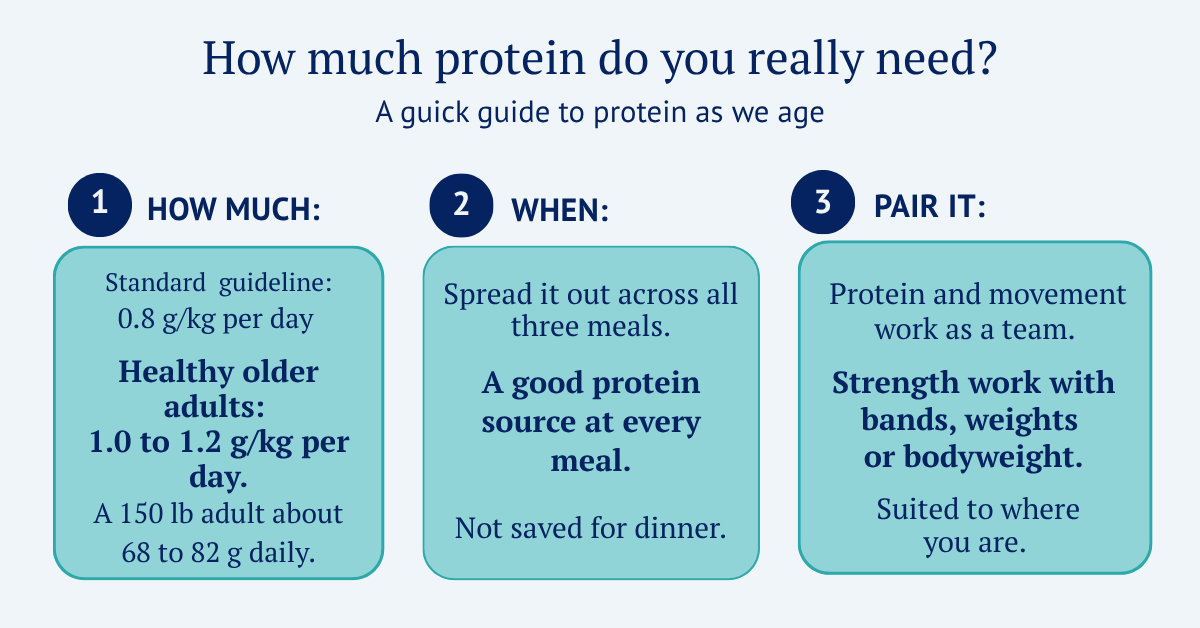
Here is where many people are surprised. The standard recommended amount of protein, about 0.8 grams per kg of body weight per day, was set at the same level for younger and older adults. But a growing body of research suggests that older adults actually need more.
Many experts now recommend that healthy older adults aim for roughly 1.0 -1.2 grams of protein per kg of body weight each day. So a person who weighs about 150 pounds would be looking at roughly 68 to 82 grams of protein a day.
Why the increase? As we get older, our muscles become a little less responsive to protein, so it simply takes more to get the same benefit. It is not a flaw, just a shift worth planning for. The National Institute on Aging offers a helpful overview of healthy eating and protein for older adults if you would like to read more.
It is not just how much, but when
There is a second piece that often gets overlooked, and it may be the most useful thing you take from this. It is not only about your total protein for the day. It is about spreading it out.
Your body can only use so much protein at once to build and maintain muscle. So rather than saving most of your protein for dinner, aim for a good source at each meal. A meaningful amount at breakfast, lunch, and dinner does more for your muscle than the same total piled onto one plate at the end of the day.
Making it doable
Reaching these targets is easier said than done, and we want to be honest about that. Appetites often shrink with age, and protein-rich foods can feel filling or hard to get through. If you are coming up short, you are far from alone.
This is where a little support can make a real difference. Whole-food sources like eggs, fish, poultry, dairy, beans, and lentils come first. If food alone feels overwhelming to fill the gap, protein powders are a simple way to add quality protein to your day. A scoop in a smoothie, a bowl of oatmeal, or even your coffee can quietly move you toward your goal.
Protein plus movement
Protein does its best work with a partner, and that partner is movement, specifically strength work. In the body, it’s protein that supplies the building blocks, and resistance training gives your body the signal to actually use them for muscle.
This does not mean an intense gym routine unless you want one. It means consistency, whether that is resistance bands, moderate weights, bodyweight exercises, or a class built for you. Paired together, good protein and regular movement are a powerful team for staying strong.
Aging with strength and confidence
Your protein needs as we age are not a sign of decline. They are simply information, and information you can act on. With enough quality protein and movement you enjoy, you are building a foundation for the strong, independent, capable years ahead.
One gentle note: if you have kidney disease, your protein needs may be different, so it is always wise to check with your provider before making big changes.
Not sure where to start, or how much protein is right for you? That is exactly what we are here for.