

Fish oil has long been a staple supplement for those interested in staying healthy. Ongoing research continues to provide new insights into the many benefits long-chain omega-3 fatty acids from fish can contribute to human health. Many people are familiar with the superstars of those fatty acids; DHA and EPA. Lesser-known DPA is another important fatty acid that is making a comeback.
Cod liver oil was among the first fish oil supplements. For hundreds of years, fresh cod liver oil was used as a health tonic in European fishing communities. During the twentieth century, cod liver oil fell out of favor, as the oil went rancid if not consumed quickly. Modern methods of purifying and packaging have since remedied this difficulty, but not without inducing a hidden cost to the oil’s nutritional potential.
Most fish oil supplements on the market today are purified using distillation or similar technology. While these methods are quite useful for removing heavy metals and other contaminants, they also inadvertently destroy much of a particular lipid – Docosapentaenoic acid, which may have contributed to the remarkable utility of the original cod liver oils.
Docosapentaenoic acid, or DPA, is one of several long-chain omega-3 fatty acids found in cold-water fatty fish. While it is present in lower volume than its more famous cousins (EPA and DHA), it appears to have many unique properties that warrant some attention.
Cardioprotective
While several fish oil studies have suggested that supplemental omega-3 has little effect on cardiovascular outcomes, such conclusions may be premature considering that the oils used for research focused heavily on EPA and DHA, with DPA being present only as an afterthought.
Higher concentrations of DPA have been shown to aggressively resolve arterial inflammation and reduce platelet stickiness, lower cholesterol and triglycerides and decrease the risk of atherosclerosis.
Brain Health
Higher DPA levels are associated with improved cognitive function. Omega-3 fats make up a substantial portion of brain volume. In fact, chronic omega-3 deficiency causes the brain to shrink (atrophy) over time.
Since many cognitive dysfunctions (dementia, Alzheimer’s, mood disorders, ADD/ADHD) have been shown to have an inflammatory component, it makes sense that these essential fats would have a role in resolving these difficulties.
Digestive Health
When present in the diet, DPA is useful for resolving intestinal inflammation. Improving the condition of the intestinal lining (epithelium) may reduce the risk of food allergies and malabsorption.
Improving Metabolism
DPA encourages the body to use fat for energy, a process called thermogenesis. Oxidizing fat for energy is useful for weight management and helps to maintain more stable blood glucose levels. DPA is not used for energy itself, making it more stable than EPA and DHA.
Omega-3 fatty acids are also critical to proper cell membrane function, allowing for a more efficient transfer of waste and nutrients on a cellular level. The more efficient our cells become, the higher our resting metabolic rate. This is important for weight management since our metabolism tends to slow over time, while our dietary intake rarely diminishes at the same rate, leaving us vulnerable to the dreaded “middle-age spread.”
Given that DPA appears to have greater anti-inflammatory potential than either EPA or DHA, it should not be surprising that there are pharmaceuticals currently under development for the treatment of several conditions, including elevated triglycerides, chronic inflammatory conditions, and cancer.
While eating cold-water fatty fish might be the ideal way to increase your DPA intake, not everyone is inclined to increase their fish consumption. Thankfully it’s not necessary to wait for a prescription drug to begin reaping the benefits of DPA, should fish not be on the menu.
Coastal offers a high-DPA fish oil supplement which also includes concentrated sources of EPA and DHA. Details:
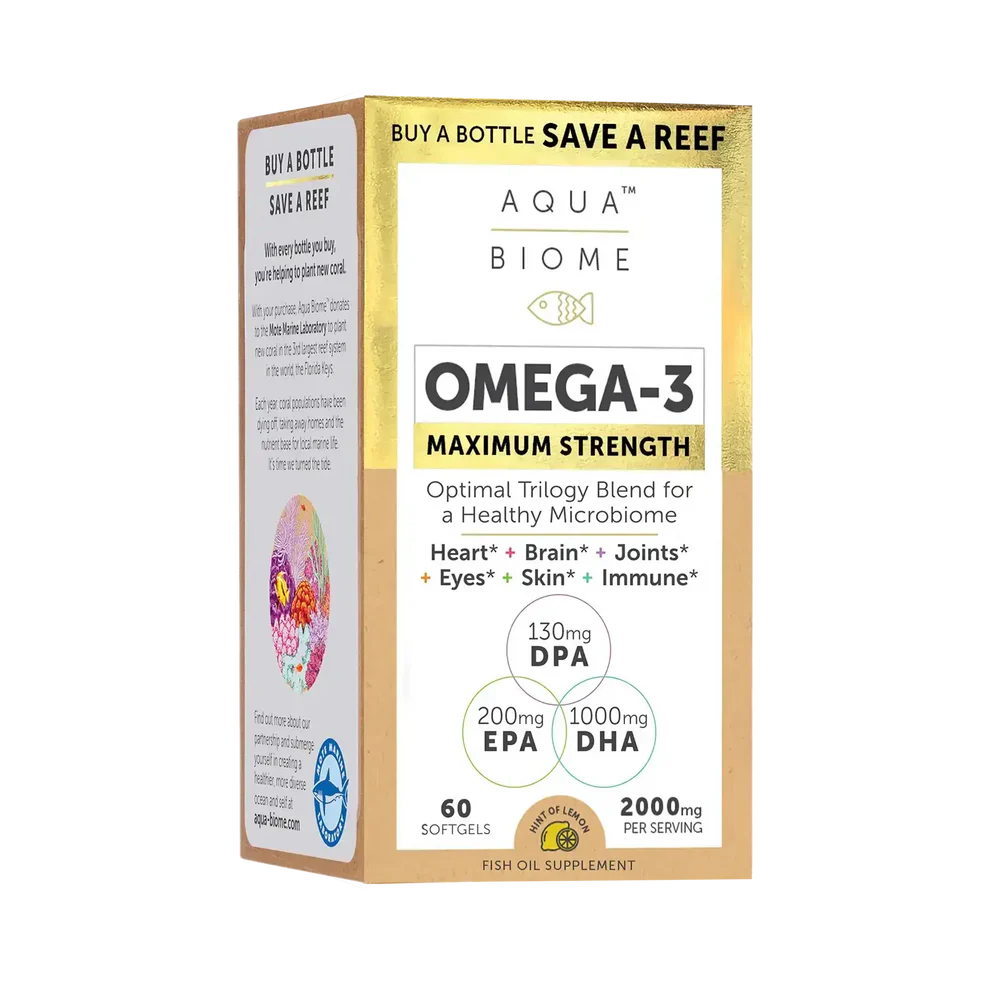
Aqua Biome™ Fish Oil Maximum Strength
Highly Concentrated Omega-3 Fish Oil: 2000 mg
- DHA (Docosahexaenoic Acid): 1000 mg
- EPA (Eicosapentaenoic Acid): 200 mg
- DPA (Docosapentaenoic Acid): 130 mg
- Other Beneficial Fatty Acids & Nutrients: 670 mg
Additional Reading
Below are links to clinical studies that provide more information on DPA and the additional nutrients used in the condition-specific Aqua Biome™ products.
- DPA: Dietary sources, current intakes, and nutritional role of omega-3 docosapentaenoic acid
- Boswellia: Boswellia serrata Preserves Intestinal Epithelial Barrier from Oxidative and Inflammatory Damage
- Meriva® Curcumin: Therapeutic Roles of Curcumin: Lessons Learned from Clinical Trials
- Quercetin: The Effects of Quercetin Supplementation on Body Composition, Exercise Performance and Muscle Damage Indices in Athletes
*These statements have not been evaluated by the Food and Drug Administration. These products are not intended to diagnose, treat, cure or prevent any disease.