

Minerals are essential to human nutrition and help ensure proper metabolism and tissue tone. Unfortunately, the concentration of minerals in whole foods has decreased steadily over the last century. This has made it increasingly harder to achieve the full benefit of minerals from food alone. Furthermore, minerals require a healthy digestive system and stomach acid to absorb effectively. People with digestive issues have an increasingly hard time getting the minerals they need to thrive, making chelated minerals essential.
Mineral chelates are a safe supplement to whole foods, designed for maximum absorption, and available over the counter. However, we encourage you to take the time to find the appropriate option since each mineral chelate offers different benefits. We’ll describe it in more detail later on.
Choosing a Mineral Supplement
When mineral supplementation is required, it is helpful to weigh your options carefully. Typical supplemental minerals, such as magnesium oxide or calcium carbonate, contain elements in a simple form. These simpler forms have the advantage of smaller-sized tablets or capsules, fewer capsules per dose, and are relatively inexpensive. However, a disadvantage to these simpler forms is that they have lower absorption rates. Absorption issues with simple mineral salts are prevalent in older individuals, those who underproduce stomach acid, or those who take acid-reducing medication. Even in healthy digestive tracts, decreased absorption of simple mineral salts may contribute to intestinal symptoms such as diarrhea or constipation. The best type of mineral supplement is chelated for advanced absorbability.
Tip:
If you start taking a mineral supplement and develop constipation or diarrhea,
it often indicates that your body is not absorbing all of the minerals.
Chelates Defined
When an acid is bound to a mineral, that mineral is said to be chelated. Chelation involves combining the inorganic mineral element with an amino acid such as glycine or an organic acid such as citric acid. Amino acids are considered superior to organic acids as they can effectively neutralize the ion’s electrical charge, reducing the chance that a similarly charged absorbent surface (e.g., intestinal walls) will repel the mineral.
Examples of acids used to chelate minerals:
Amino Acids (preferred)
- Aspartic Acid
- Methionine
- Monomethionine
- Lysine
- Glycine
- Taurine
Organic Acids
- Acetic acid
- Carbonic acid
- Citric acid
- Gluconic acid
- Fumaric acid
- Malic acid
- Orotic acid
- Picolinic acid
Benefits Beyond Absorption
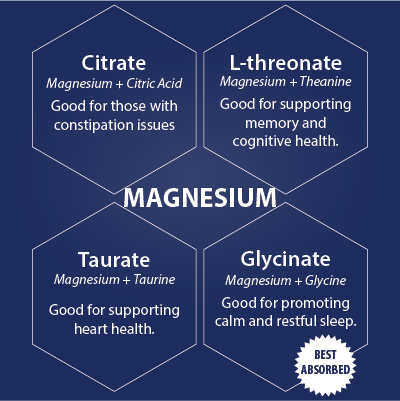
Chelation can also be helpful when using combinations that address your particular concerns. The table below shows some of these combinations and their benefits beyond increased absorption.
| Mineral | Chelating Agent | Additional Benefits of Chelating Agent |
|---|---|---|
| Magnesium Taurate | Taurine (amino) | Cardiovascular support |
| Magnesium Malate | Malic Acid (organic) | Metabolic and muscular effects |
| Magnesium Citrate Calcium Citrate | Citric Acid (organic) | Encourages intestinal motility and can help prevent or treat kidney stones. |
| Magnesium Glycinate Iron Bisglycinate | Glycine (amino) | This smallest known amino acid encourages lower volumes of Magnesium, thus avoiding bowel tolerance difficulties. Also has a mental calming influence. |
| Magnesium Orotate | Orotic Acid (organic) | Helpful for cardiac health, delaying muscle fatigue, boosting endurance, and preventing the buildup of lactic acid. |
| Chromium Picolinate Zinc Picolinate | Picolinic Acid (organic) | Neuroprotective and anti-inflammatory. |
What to Watch Out For
Most minerals are chelated, but it’s not always obvious, especially if you’re unfamiliar with the different types of acids. Some prominent labeling examples include
- using the word chelated or absorbable in the product name,
- using the compounded name as the product name, e.g., magnesium glycinate, or
- including the chelating agent on the supplement facts panel, e.g., Magnesium (as magnesium glycinate).
In Summary
Supplementation is often an effective way to address the inevitable nutritional imbalances we experience throughout our lives. However, it’s important to remember that not all supplements are created equal. Just because a label says “magnesium” doesn’t mean it’s created in a way that will encourage the best results. As always, read the supplement facts carefully, and if you’re ever unsure, please let us know.
Related Reading
Magnesium: A Mineral for Modern Times
Magnesium facilitates over 300 metabolic processes in the human body. Correcting a deficiency can alleviate many modern health concerns. Joel covers a few different forms of magnesium and explains what they can help with.

Tools to Fight Osteoporosis
There’s more to osteoporosis prevention than drinking more milk or popping a calcium tablet. Calcium supplementation has long been the main focus of bone health regimens. There are other elements, however, that are necessary for maintaining optimal skeletal support. Find out what makes up a well-rounded anti-osteoporosis plan.

Supplement Considerations for those with Irritable Bowel Syndrome (IBS)
Irritable bowel syndrome can negatively affect nutrient absorption, resulting in the need for supplementation. Read about special considerations for IBS.